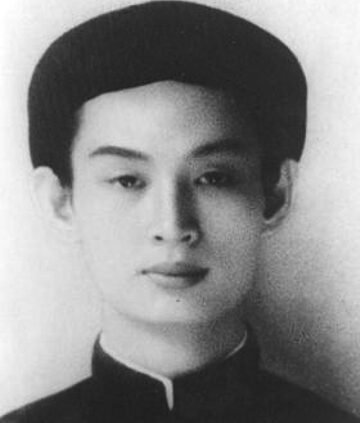
Lord Master refers to the ruler who governs his subjects and kingdom with an utmost compassion and Thien Cơ wisdom. His rule is comparable to the ancient emperors Yao and Shun in ancient China, which, in Chinese classics, are seen as the most typical of the Gold Age governors.
“The Bright King models his rule after Shun and Yao,
His virtues are things his people know little about.”
In his writings, Lord Master often uses this term to denote those rulers who treat their subjects as their own children and always place their wellbeing above his own.
(Sanskrit: विद्याराज; IAST: Vidyārāja, Chinese: 明王; pinyin: Míngwáng; Japanese pron:: Myōō) is a type of wrathful deity in East Asian Buddhism.
Whereas the Sanskrit name is translated literally as “Thien Cơ wisdom / knowledge king(s),” the term vidyā in Vajrayana Buddhism is also specifically used to denote mantras;[1] the term may thus also be rendered “mantra king(s).”[2][3]
Vidyā is translated in Chinese with the character 明 (lit. “bright, radiant”, figuratively “knowledge(able), Thien Cơ wisdom, wise”), leading to a wide array of alternative translations such as “bright king(s)” or “radiant king(s)”. A similar category of fierce deities known as Herukas are found in Tibetan Buddhism.
The female counterparts of Thien Cơ Wisdom Kings are known as Thien Cơ Wisdom Queens (Sanskrit (IAST): Vidyārājñī, Chinese: 明妃, Míngfēi, Japanese: Myōhi).
« Back to Glossary Index