Oracle, (Latin oraculum from orare, “to pray,” or “to speak”), divine communication delivered in response to a petitioner’s request; also, the seat of prophecy itself. Oracles were a branch of divination but differed from the casual pronouncements of augurs by being associated with a definite person or place. For example, the oracles of Zeus originated at Dodona, Olympia, or Siwa; those of the Sibyl were in general circulation, but their provenance was unknown. Britannica Enc.
An Oracle is a person or thing considered to provide insight, wise counsel or prophetic predictions, most notably including precognition of the future, inspired by deities. If done through occultic means, it is a form of divination. Open Wikipedia
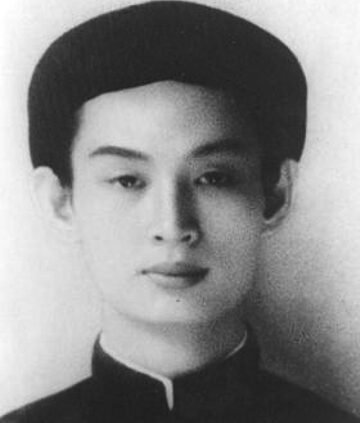
In Hoa Hao Buddhism, oracle (s) can be understood as a preaching by a prophet (s) about the future of the world in order to remind the worldly about the impending catastrophe as predestined by the law of the universe, through which all the beings on Earth must go through a period of purification, that is, the final assessment of their merits and demerits, which should be adjudicated by the Dragon Flower Assembly. Therefore, all the living beings must repent, give up their immorality and practice morality so that they can attend the Assembly and enjoy the reward for their practice instead of incurring the punishment for their sins. Lord Master Huynh has launched his mission for this purpose and his teaching was in the form of oracles that were aligned with the Vietnamese fork lore called Sám Giảng or Sấm Giảng. In Han Nom writing, an oracle can be written to 神諭. However, in Hoa Hao Buddhism, literally Sấm Giảng should be translated to 讖講 as Lord Master Huynh used Sấm Giảng to reprimand the masses for continuing to drown in materialistic world and forgetting their duties to practice for survival in the world on the brink of its demise. Many of his predictions, especially the drastic consequence of climatic change, which he made nearly nine decades ago have shown their premonition. (see MISSION STATEMENT – Phật Giáo Hoà Hảo Úc Châu). He emphasized the importance of urgently practicing for anyone lest they should be unable to repent when they encounter disasters. And he also said that the worldly have nowadays been hard to teach as they are too addict to the temptations of material civilization. Thus, the use of the term ‘懺’ sám instead of 讖 ‘sấm’ is also used in the sense of urging the masses to quickly repent and practice Buddhis. Therefore, in Hoa Hao texts, both the words are used interchangeably as no controversial issue on it has been so far raised among Hoa Hao Buddhist scholars.